 Contact
The book is the playbook.
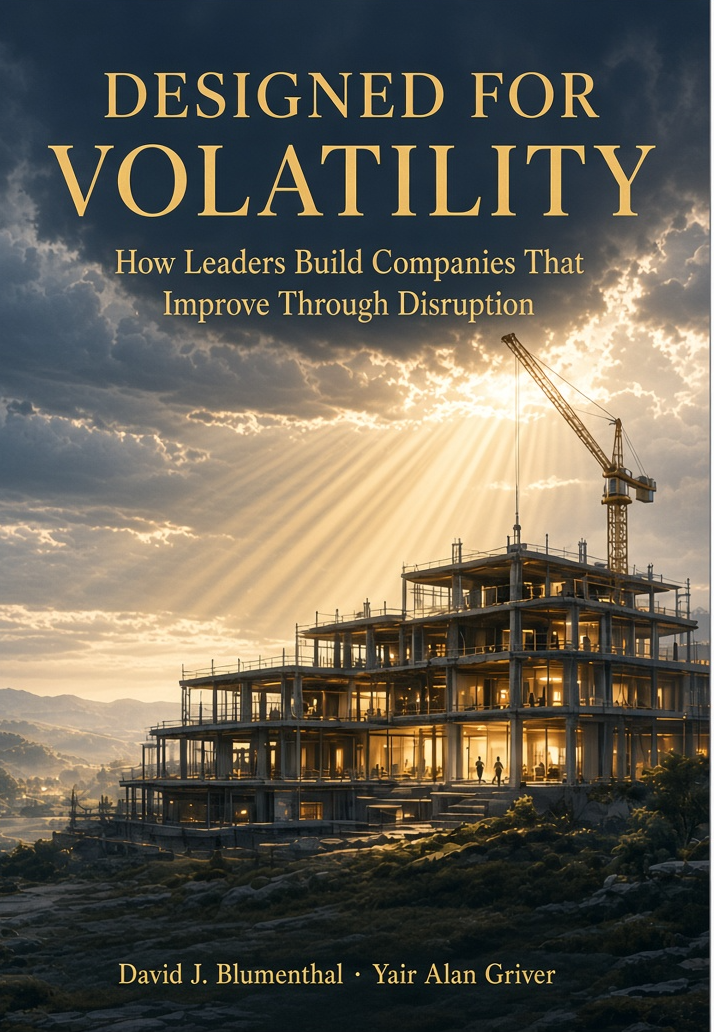
A practical playbook for leaders who will stop targeting resilience and rebuild the company so volatility makes it stronger.
Designed for Volatility takes Taleb’s insight — some systems improve because of volatility — and turns it into an operating model a leadership team can run.
The recurring test is AI. Not a technology race: a full exam of the enterprise. AI exposes weak data, unclear decision rights, brittle workflows, cultural silence, outdated talent models, misaligned incentives, and fragile metrics. Used well, that exposure is how the company redesigns how it learns, governs, funds, measures, and adapts.
The book is the shared language for that rebuild.
A written report on hidden fragility. Copies go live when the book ships. Until then, the diagnostic is the door.
What is inside
Four moves, not a syllabus:
See the fragility
Name what looks stable in a quiet quarter and fails when variance arrives.
Protect the core
Wall off what must not fail. Everything else can take a punch — including the next AI pilot.
Build the option portfolio
Small bets, kill rules, barbell allocation.
Hold a 90-day cadence
What we protected, what we tried, what we killed, what we try next.
Under those moves: strategy as a guidance system, decision rights closer to the work, communication as infrastructure, consequences tied to incentives and metrics, and a 90-day / 180-day / 12-month operating plan. Methods and team tools, not a theory to admire.